

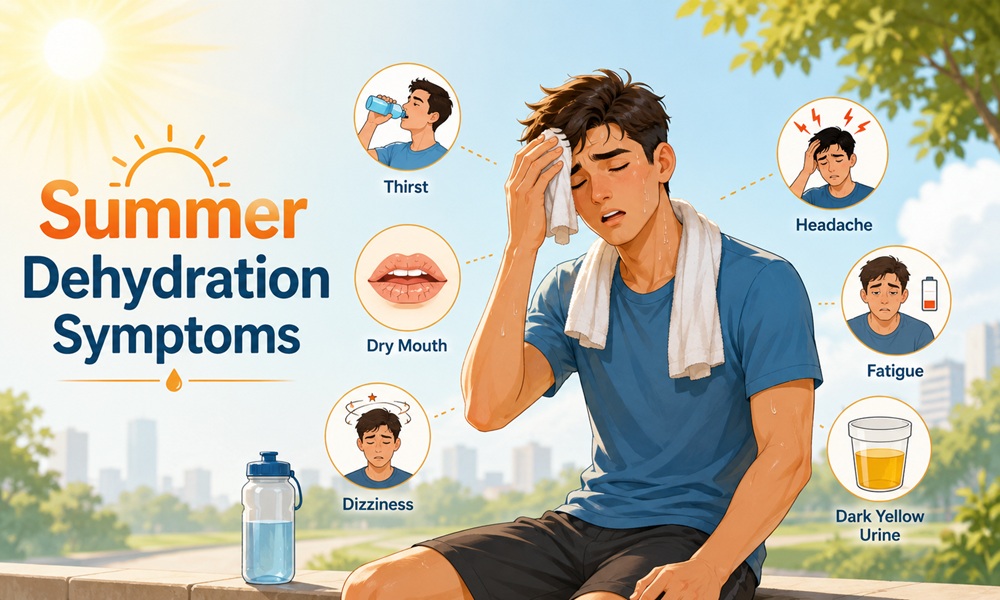
Hot weather quietly pulls fluid out of the body through sweat. Catching dehydration in its early, mild stage — before it becomes serious — is the whole game in summer.
The silent early signs (catch it here)
- Thirst and a dry, sticky mouth.
- Dark yellow urine and going less often.
- Tiredness, low energy, or a dull headache.
- Trouble concentrating or feeling irritable.
- Dry lips and skin.
Stages of dehydration
| Stage | What you notice | What to do |
| Mild | Thirst, dark urine, dry mouth, slight headache | Sip water + electrolytes; rest in the shade |
| Moderate | Dizziness, fast heartbeat, very little urine, weakness | Drink ORS steadily; cool down; monitor closely |
| Severe | Confusion, fainting, sunken eyes, no urine, rapid weak pulse | Emergency — seek medical help immediately |
| THE 30-SECOND URINE CHECK
Urine colour is the simplest home gauge of hydration. Pale straw or light yellow = well hydrated. Dark yellow or amber = drink more now. Going to the toilet far less than usual is another early warning. (Some vitamins and foods can tint urine, so judge alongside how you feel.) |
Why thirst is a poor early alarm
Thirst tends to switch on only after you have already lost a meaningful amount of fluid — so relying on thirst alone means you are always playing catch-up. In summer, drink on a schedule rather than waiting to feel thirsty, especially if you are active or outdoors.
Who is most at risk in summer
- Young children and babies, who dehydrate quickly.
- Older adults, whose thirst signal is weaker.
- Outdoor workers and athletes losing heavy sweat.
- Anyone with fever, vomiting, or diarrhoea on top of the heat.
Best ways to rehydrate in the heat
Not all drinks rehydrate equally. The goal is to replace both water and the salts lost in sweat.
- Water covers light, everyday needs.
- Oral rehydration solution (ORS) is best after heavy sweating, vomiting, or diarrhoea.
- Coconut water, buttermilk, and lemon water are refreshing, electrolyte-friendly options.
- Water-rich foods — watermelon, cucumber, oranges — add fluid plus nutrients.
- Sip steadily, not in large gulps, so your body absorbs it better.
Go easy on very sugary sodas, energy drinks, excess caffeine, and alcohol, which can work against hydration.
Watch children closely
Babies and young children dehydrate quickly in heat. Warning signs include a dry mouth, no tears when crying, far fewer wet nappies, sunken eyes, and unusual sleepiness or irritability. These need prompt attention and, often, medical advice.
The bottom line: don’t wait for thirst. In summer, drink on a schedule, keep an eye on urine colour, replace salts after heavy sweating, and act at the first mild signs — catching dehydration early keeps it from turning serious.
How to rehydrate and prevent it
- Drink regularly through the day — do not wait for thirst.
- Add electrolytes (ORS or a balanced drink) after heavy sweating, since you lose salts as well as water.
- Eat water-rich foods like cucumber, watermelon, citrus, and yoghurt-based drinks.
- Limit alcohol and excess caffeine, which increase fluid loss.
- Avoid peak heat and take shade breaks; wear light, loose clothing.
| SEEK URGENT CARE IF…
There is confusion or extreme drowsiness, fainting, no urine for many hours, a rapid weak pulse, sunken eyes, or — in a child — no wet nappies, no tears when crying, or unusual sleepiness. Severe dehydration can lead to shock and needs immediate treatment, sometimes with IV fluids. |
FAQ
How much water should I drink in summer?
Needs vary with body size, activity, and how much you sweat, so use thirst plus urine colour as your guide and drink more on hot or active days. Pale urine and rare thirst suggest you are on track.
Is plain water enough, or do I need electrolytes?
For light activity, water is usually fine. After heavy sweating, vomiting, or diarrhoea, add an oral rehydration solution or electrolyte drink to replace lost salts.
What are the first signs of dehydration to look for?
Thirst, a dry mouth, dark-yellow urine, going to the toilet less often, tiredness, and a mild headache are the earliest clues — act on these before they progress.
Can you be dehydrated even if you are drinking water?
Yes — if losses from heavy sweat or illness outpace intake, or if you lose salts without replacing them, you can still become dehydrated. Match intake to how much you are losing.