

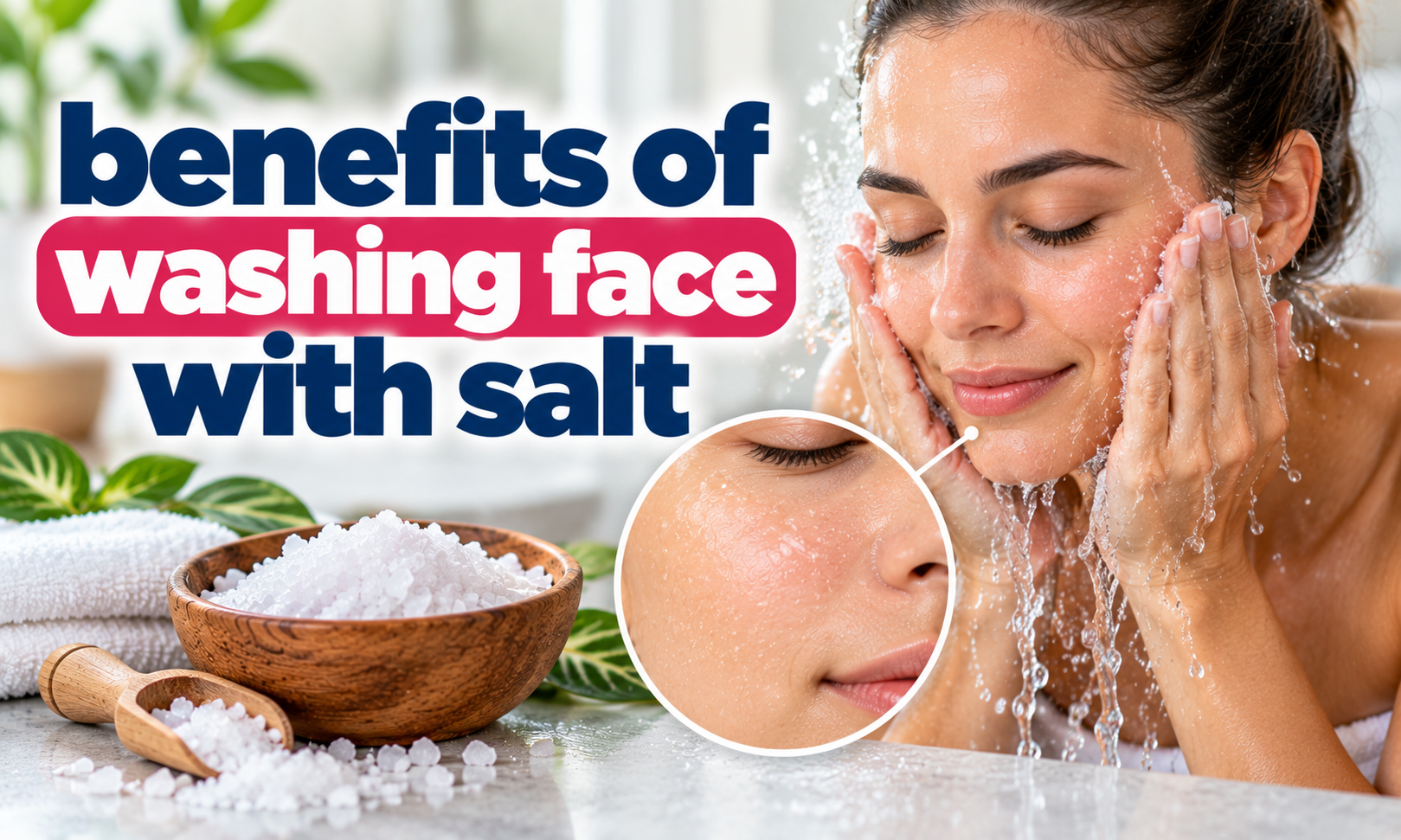
The potential benefits of washing face with salt are often described as cleaner pores, smoother skin, and less oil. Salt water can temporarily remove surface oil and loosen some dead skin, which may make the face feel fresher. But those effects are limited, and salt water is not a proven treatment for acne, dark spots, enlarged pores, or most other skin concerns.
For many people, especially those with dry, sensitive, eczema-prone, or already irritated skin, salt water can do more harm than good if it is too concentrated or used too often. Dermatologists generally favor gentle cleansing, lukewarm water, and moisturizing over abrasive DIY remedies. The key is understanding where salt water may help a little, where the claims are overstated, and when to skip it altogether.
What Happens When Salt Water Touches Your Skin?
Salt attracts water and can change the way the skin surface feels. A mild salt-water rinse may remove some oil, sweat, and loose flakes. Salt crystals can also act as a mechanical exfoliant if rubbed on the skin, although that friction is exactly why scrubbing salt directly on the face is usually a poor idea.
The outer skin barrier is made to hold water in and keep irritants out. Strong or repeated salt exposure can pull moisture from the surface and leave the skin tight, dry, flaky, or irritated. That is why a face can feel smooth immediately after salt water yet become uncomfortable later in the day.
Possible Benefits of Washing Your Face With Salt Water
- Temporary oil removal: Salt water may help lift some surface oil, which can make oily skin feel less greasy for a short time.
- Mild exfoliation: Salt can help loosen dead surface cells. A diluted rinse is gentler than physically rubbing salt crystals on the face.
- A cleaner skin feel: Rinsing can remove sweat and debris, although a gentle facial cleanser is usually more reliable and less drying.
- Short-term smoother texture: Removing loose flakes and oil may make the skin feel smoother temporarily.
These possible benefits should not be confused with medical treatment. Salt water has not been shown to reliably clear acne, shrink pores permanently, fade scars, or replace evidence-based skin-care products.
Does Salt Water Help Acne?
It may sound logical that salt could “dry out” pimples, but acne is not simply a problem of too much water or oil. Acne involves clogged pores, inflammation, oil production, and bacteria living within the follicle. Overdrying the skin can irritate the barrier and sometimes make an acne routine harder to tolerate.
The American Academy of Dermatology recommends washing acne-prone skin gently up to twice daily and after sweating, using a non-abrasive cleanser and avoiding products that irritate the skin. In other words, harshness is not the goal of acne cleansing.
Salt Water vs. a Gentle Cleanser
| Option | Potential Advantage | Main Drawback | Best Use |
| Diluted salt water | May briefly reduce oil and loosen flakes | Can sting, dry, or irritate | Occasional use if skin tolerates it |
| Salt scrub | Strong exfoliating feel | Too abrasive for many faces | Generally best avoided on facial skin |
| Gentle cleanser | Removes oil, sunscreen, dirt, and sweat | May need trial and error to find the right formula | Routine daily cleansing |
| Water only | Very gentle for some people | May not remove sunscreen, makeup, or excess oil well | Light morning rinse for selected skin types |
Who Should Be Careful With Salt Water?
Salt water is more likely to cause problems when the skin barrier is already fragile. Be especially cautious if you have:
- eczema or very dry skin
- rosacea or frequent facial redness
- active peeling, cracked skin, or open sores
- a recent chemical peel, laser treatment, or strong retinoid routine
- stinging or burning from ordinary skin-care products
If salt water causes burning, persistent redness, scaling, itching, or worsening breakouts, stop using it. The AAD recommends a gentle, non-abrasive face-washing routine with lukewarm water and moisturizer when needed.
Can Salt Water Damage the Skin Barrier?
Yes, especially when it is concentrated or used repeatedly. A healthy skin barrier contains lipids and natural moisturizing factors that help keep water inside the skin. Too much salt exposure can leave the surface dehydrated and more reactive. That can lead to tightness, flaking, sensitivity, and a rough texture.
This is one reason a day at the beach and a homemade salt rinse are not equivalent. Ocean water contains a mixture of minerals, but it can still dry or irritate skin. Any “glow” after swimming may come from temporary exfoliation, oil removal, sun exposure, or other environmental effects rather than a lasting skin-health benefit.
Is Sea Salt Better Than Table Salt for the Face?
Not necessarily. Sea salt may contain trace minerals, but those minerals do not automatically make it a safe facial treatment. Some research on mineral-rich bathing water, including Dead Sea preparations, has explored benefits for certain skin conditions. Those findings do not mean that rubbing ordinary sea salt on the face will produce the same result.
If you are interested in mineral-based skin care, a professionally formulated product is generally more predictable than a homemade mixture because its concentration, pH, and supporting ingredients are controlled.
How to Try Salt Water More Safely
If your skin is healthy and you still want to experiment, keep the approach conservative:
- Use a very dilute solution rather than rubbing dry salt or coarse crystals directly on the face.
- Apply it briefly and gently. Do not scrub.
- Rinse with plain lukewarm water afterward if your skin feels tight or sticky.
- Apply a fragrance-free moisturizer to help reduce dryness.
- Start no more than once a week and stop if irritation develops.
- Do not use salt water as a substitute for proven acne or eczema treatment.
The Healthline reference on washing your face with salt water similarly advises occasional use and warns that overuse can compromise the skin barrier.
What Is Better Than Salt Water for Most Skin Goals?
| Skin Goal | Usually Better Option | Why |
| Remove oil and dirt | Gentle facial cleanser | Cleans without relying on abrasive salt |
| Treat clogged pores | Salicylic acid product | Helps work inside oily pores |
| Improve dryness | Moisturizer with ceramides or humectants | Supports the skin barrier |
| Brighten rough texture | Well-formulated exfoliant | More controlled than salt crystals |
| Manage acne | Evidence-based acne treatment | Targets acne mechanisms more directly |
When Should You See a Dermatologist?
Talk with a dermatologist if you have persistent acne, facial burning, recurring rash, painful cracks, dark marks after irritation, or a skin condition that is not improving with gentle home care. A dermatologist can identify whether the problem is acne, eczema, rosacea, contact dermatitis, or something else and recommend treatment that fits your skin type.
Frequently Asked Questions
Can I wash my face with salt water every day?
For most people, daily salt-water washing is unnecessary and may increase dryness or irritation. A gentle cleanser is usually a better everyday option.
Does salt water remove pimples overnight?
No. Salt water may dry the surface temporarily, but it does not reliably treat the clogged pores and inflammation that drive acne.
Can salt water shrink pores?
It may make pores look less noticeable briefly by removing oil, but it cannot permanently change pore size.
Is salt water good for oily skin?
Some people with oily skin may like the short-term degreasing effect, but overuse can still irritate or dehydrate the skin.
Should I use Himalayan salt, sea salt, or table salt?
There is no strong evidence that one household salt provides superior facial-skin benefits. Concentration and skin tolerance matter more than the marketing name.
Can I use salt water if I have eczema?
Use caution. Damaged or eczema-prone skin may sting or become drier. Ask a dermatologist before using salt water on active eczema.
The Bottom Line
The main benefits of washing face with salt are modest and temporary: a diluted rinse may remove some surface oil, loosen dead skin, and leave the face feeling smoother. The trade-off is that salt can also dehydrate and irritate the skin, especially when used frequently or rubbed directly on the face.
For everyday skin health, a gentle cleanser, lukewarm water, moisturizer, sunscreen, and targeted treatments are more dependable than DIY salt water. If you decide to try salt water, keep it diluted, infrequent, and gentle, and stop at the first sign of irritation.