

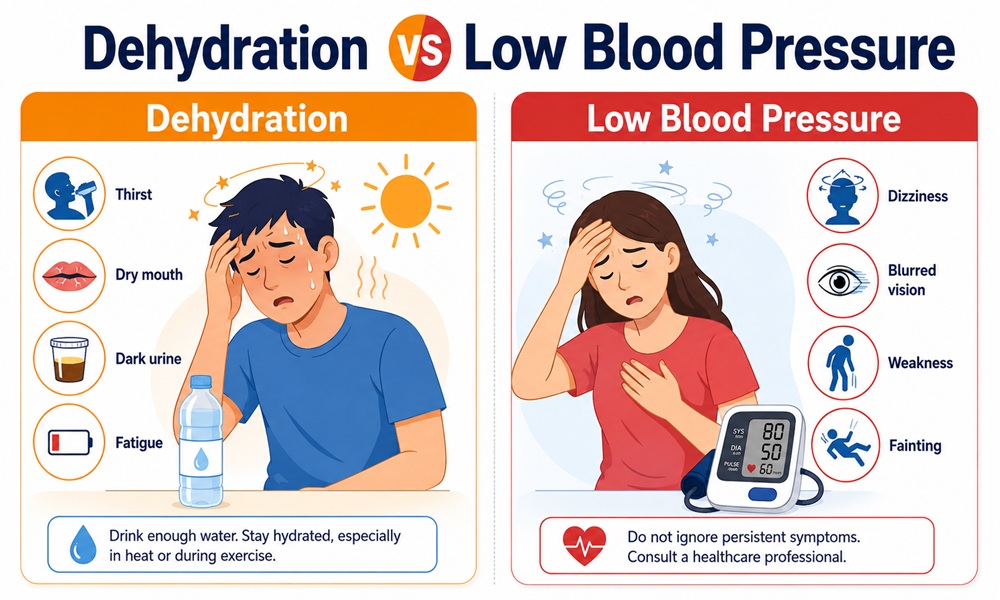
Because dehydration and low blood pressure feel so alike, people often mix them up. This guide answers the questions readers ask most.
Are dehydration and low blood pressure the same thing?
No. Dehydration is a fluid problem — you have lost more water and salts than you have taken in. Low blood pressure is a circulation reading — generally below about 90/60 mmHg. They are different, but closely connected.
How are they linked?
When you are dehydrated, there is less fluid in your bloodstream. Less blood volume means less pressure pushing against your artery walls — so dehydration can directly cause or worsen low blood pressure. This is why rehydrating often brings a low reading back up.
What symptoms do they share?
- Dizziness or light-headedness, especially on standing.
- Fatigue and weakness.
- Fast heartbeat (the heart speeds up to compensate).
- Trouble concentrating or feeling ‘foggy’.
How can I tell them apart?
| Sign | Points to dehydration | Points to low blood pressure |
| Thirst | Strong | Not a main feature |
| Urine | Dark, small amounts | Usually normal colour |
| Mouth / skin | Dry mouth, dry skin | Often normal |
| Dizziness on standing | Yes | Yes (postural drop) |
| Blood pressure reading | May be normal or low | Low (often <90/60) |
| Best first fix | Fluids + electrolytes | Depends on cause; fluids help if dehydrated |
| THE STANDING-UP TEST (ORTHOSTATIC DROP)
A useful clue is what happens when you stand. If blood pressure falls sharply on standing — about 20 mmHg or more in the top number, or 10 mmHg in the bottom number — with dizziness, that is orthostatic (postural) hypotension. Dehydration is a leading cause. Rising slowly and sipping fluids before standing helps. |
Is low blood pressure always a problem?
Not always. Some healthy people — especially fit, younger adults — simply run low and feel fine. That is constitutional low blood pressure and needs no treatment. The concern is a sudden drop, or low pressure with symptoms like fainting, confusion, chest pain, or cold, clammy skin.
What should I do for each?
For dehydration
- Sip water steadily; add an oral rehydration solution (ORS) or electrolyte drink if you have been sweating, vomiting, or had diarrhoea.
- Rest in a cool place and avoid further fluid loss.
For low blood pressure
- Stand up slowly; sit or lie down at the first sign of dizziness.
- Stay hydrated and do not skip meals; a little extra salt may help if a doctor agrees.
- If episodes are frequent, get the underlying cause checked.
Everyday situations that cause both
The two often show up together in the same scenarios, which is exactly why they get confused:
- Hot weather and heavy sweating. Fluid loss lowers blood volume and can drop blood pressure.
- Vomiting or diarrhoea. Rapid loss of fluid and salt causes dehydration and faintness.
- Skipping meals or standing too long. Both can trigger a postural blood-pressure dip.
- After intense exercise. Sweat loss plus widened blood vessels can leave you light-headed.
In each case the practical first move is the same: sit or lie down, cool off, and rehydrate slowly with water and electrolytes. If symptoms keep returning despite good hydration, ask a doctor to check your blood pressure and look for an underlying cause, since some medicines and conditions lower it independently of fluids.
| GET URGENT HELP IF…
There is fainting, confusion, a very fast or weak pulse, cold and clammy skin, chest pain, severe dizziness, or no urine for many hours. These can signal severe dehydration or shock and need immediate care. |
FAQ
Can drinking water raise low blood pressure?
If low blood pressure is caused by dehydration, drinking water and electrolytes can raise it. Plain water alone helps; adding salts helps more after heavy fluid loss.
Why do I feel dizzy when I stand up?
Standing pools blood in the legs, briefly dropping the supply to the brain. Dehydration and low blood pressure both make this worse. Rising slowly usually fixes it.
Which is more dangerous?
Both can be dangerous if severe. Severe dehydration can cause shock and organ strain; a sudden large drop in blood pressure can cause fainting and injury. Mild cases of either are usually easy to correct.