
A practical guide to localized yellow discoloration, jaundice, bruising, and cholesterol-related skin changes
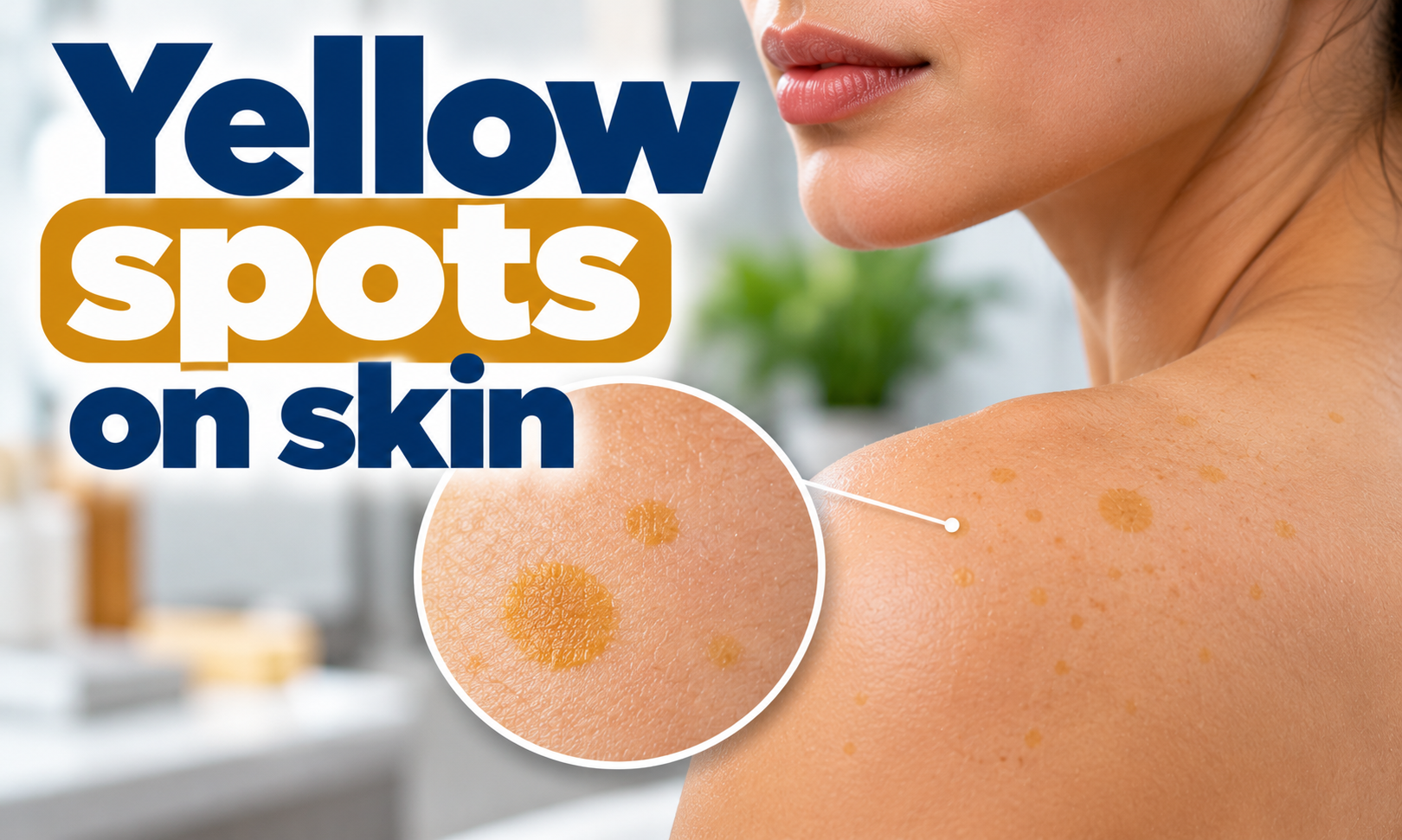
Yellow spots on skin can come from several very different causes. A small yellow patch after a bump may be a healing bruise, while soft yellow bumps around the eyelids may be cholesterol deposits. Jaundice usually causes broader yellowing and often changes the whites of the eyes too. Pattern, location, texture, timing, and other symptoms help separate a local skin change from something needing medical evaluation.
Because yellow discoloration can sometimes reflect liver, gallbladder, blood, metabolic, or cholesterol problems, a new or unexplained change should not be diagnosed by color alone.
What can cause yellow spots on the skin?
There is no single diagnosis for a yellow spot. Some causes affect only a small area of skin, while others change skin color across larger parts of the body. The following are among the more important possibilities.
1. A healing bruise
Bruises commonly change color as trapped blood under the skin breaks down. Cleveland Clinic notes that healing bruises can shift from red or purple to brown, green, or yellow. Its overview of bruising explains these normal color changes. A yellow spot is more likely to be a fading bruise if it appeared after a bump, sports injury, injection, pressure, or minor trauma and is gradually getting lighter.
- Often tender at first, then less painful as it heals
- May have previously looked red, purple, blue, or green
- Usually fades over days to a couple of weeks, although deeper bruises can last longer
Frequent unexplained bruising, very large bruises, or bruising with unusual bleeding should be discussed with a healthcare professional, especially if you take blood thinners.
2. Xanthelasma or other xanthomas
Yellowish, soft, or waxy bumps can be deposits of fat under the skin. Xanthelasma most often appears near the inner corners of the eyelids. Xanthomas can develop in other locations, including the hands, elbows, knees, feet, or tendons. These changes are different from jaundice.
The American Academy of Dermatology advises that yellowish-orange waxy growths can be associated with unhealthy cholesterol levels or diabetes. Sudden clusters of yellowish bumps can also occur when triglyceride levels are extremely high. If you develop these changes, a clinician may recommend cholesterol, triglyceride, or blood sugar testing.
3. Jaundice
Jaundice happens when bilirubin, a yellow pigment produced during normal red blood cell breakdown, builds up in the body. Rather than creating one isolated dot, jaundice more often produces a yellow tint across the skin, the whites of the eyes, and sometimes the inside of the mouth. It can occur with liver disease, hepatitis, bile duct obstruction, gallstones, certain blood disorders, medication-related liver injury, and other conditions.
According to MedlinePlus guidance on jaundice, accompanying clues can include dark or brown urine, pale or clay-colored stools, and itching. Adults with new yellow skin or yellow eyes should seek medical assessment because the underlying cause can sometimes be serious.
4. Carotene-related yellow-orange skin
Eating very large amounts of beta-carotene-rich foods can sometimes make the skin look yellow-orange. Foods high in carotenoids include carrots, sweet potatoes, pumpkin, and some leafy greens. A useful clue is that carotene-related discoloration generally does not make the whites of the eyes yellow. It also tends to be more diffuse than a single spot.
Persistent orange-yellow discoloration still deserves evaluation if the cause is uncertain.
5. Thickened or damaged skin
Calluses and corns can look yellowish because layers of keratin become thick and compact. These areas usually occur where repeated pressure or friction is present, such as the palms, fingers, heels, or soles of the feet. The skin may feel harder than the surrounding area rather than soft or inflamed.
A yellow area that is painful, draining, warm, enlarging, or associated with an open wound should not automatically be assumed to be a callus. People with diabetes should be especially cautious about new foot changes.
How can you tell a local yellow spot from jaundice?
| Feature | Localized yellow spot | Possible jaundice | What to do |
| Pattern | One or a few defined areas | More generalized yellow tint | Compare the area with nearby skin in natural light |
| Whites of eyes | Usually unchanged | Often yellow | Yellow eyes need prompt medical evaluation |
| Texture | May be tender, hard, raised, or waxy | Usually normal skin texture | Texture can help identify a local skin condition |
| Other symptoms | May have none or local soreness | Dark urine, pale stool, itching, fatigue, nausea, abdominal pain may occur | Contact a clinician if systemic symptoms are present |
| Typical examples | Healing bruise, xanthoma, callus | Liver, bile duct, blood, or gallbladder disorders | Testing may be needed to identify the cause |
Skin tone can affect how yellowing appears. On darker skin, jaundice may be easier to notice in the whites of the eyes, inside the mouth, or through associated changes in urine and stool rather than from skin color alone.
When are yellow spots a reason to seek urgent care?
An isolated, fading yellow bruise after a known injury is usually less concerning than yellowing accompanied by other symptoms. Seek prompt medical care if you notice:
- Yellowing of the whites of the eyes
- Dark brown or tea-colored urine with pale or clay-colored stools
- Severe or worsening abdominal pain, especially in the upper right abdomen
- Fever, repeated vomiting, marked weakness, confusion, or unusual sleepiness
- New widespread itching without an obvious rash
- Rapidly increasing yellow discoloration
- Unexplained bruising, bleeding, or many new yellow-purple marks
- Sudden clusters of yellow or waxy bumps, particularly if you have diabetes or a history of high cholesterol or triglycerides
Newborn jaundice is common but still needs pediatric monitoring because bilirubin can become dangerously high in some infants.
How do doctors diagnose the cause?
Evaluation starts with the appearance and history of the discoloration. A clinician may ask when it started, whether it changed color, recent injuries, medicines or supplements, alcohol use, diet, and symptoms such as itching, dark urine, abdominal pain, or weight loss.
If jaundice is possible, blood tests can measure bilirubin and assess liver function. Depending on the findings, testing may also include a complete blood count, hepatitis testing, or imaging of the liver and gallbladder. If a waxy yellow growth suggests a xanthoma, lipid and glucose testing may be appropriate. A dermatologist may examine a persistent skin lesion more closely if the diagnosis is uncertain.
What should you do at home?
Home care depends entirely on the cause. Do not try to bleach, scrub, or chemically peel unexplained yellow spots. These approaches can irritate the skin without treating the underlying problem.
- Photograph the area in consistent natural light so you can see whether it is changing.
- Think about recent bumps, exercise, injections, pressure, or friction that could explain a bruise or callus.
- Check whether the whites of your eyes also look yellow.
- Notice whether urine or stool color has changed and whether you have itching, abdominal symptoms, fever, or unusual fatigue.
- Arrange medical care if the discoloration is unexplained, persistent, spreading, raised, painful, or accompanied by other symptoms.
Quick guide to common patterns
| What you notice | Possible explanation | Useful next step |
| Yellow area that used to be purple or blue | Healing bruise | Watch for gradual fading; seek care if unexplained or unusually frequent |
| Soft yellow plaques near eyelids | Xanthelasma | Ask about cholesterol and cardiovascular risk assessment |
| Multiple yellow waxy bumps | Xanthomas or very high blood fats | Ask about lipid testing |
| Yellow skin plus yellow eyes | Jaundice | Seek prompt medical assessment |
| Yellow-orange skin but eyes stay white | Possible carotene effect or another pigment change | Review diet and discuss persistent changes with a clinician |
| Hard yellowish skin on heel or palm | Callus or corn | Reduce friction; seek care if painful, infected, or if you have diabetes |
Frequently asked questions
Can a bruise turn yellow without being serious?
Yes. A bruise often becomes green or yellow as blood pigments under the skin are broken down. A spot that clearly follows an injury and gradually fades is generally more reassuring than one that appears without explanation.
Do yellow spots on skin always mean liver disease?
No. Localized yellow spots can come from bruising, xanthomas, calluses, and other skin changes. Liver-related jaundice is more likely to cause widespread yellowing and yellowing of the whites of the eyes.
What are yellow spots around the eyes?
Soft yellow plaques around the eyelids may be xanthelasma, which are cholesterol deposits in the skin. They can occur even when cholesterol is normal, but they are a good reason to discuss lipid testing with a healthcare professional.
Can high cholesterol cause yellow skin spots?
It can cause yellowish deposits called xanthomas or xanthelasma. These may look waxy, raised, or plaque-like rather than simply changing the color of flat skin.
Should I worry if only my skin looks yellow but my eyes are white?
White eyes make classic jaundice less likely, but they do not identify the cause. Diet-related carotene changes, bruising, local skin conditions, or lighting can alter skin color. Persistent or unexplained changes should be assessed.
When should I see a dermatologist?
See a dermatologist or primary care clinician if a yellow spot persists, grows, changes texture, becomes painful, appears without an obvious cause, or is associated with new bumps. If the eyes are yellow or you have dark urine, pale stools, severe abdominal pain, fever, or confusion, seek medical care promptly rather than waiting for a routine skin appointment.
The bottom line
Yellow spots on the skin are a visual clue, not a diagnosis. A healing bruise is one of the most common explanations for a temporary yellow patch, while waxy yellow bumps can point to cholesterol or triglyceride deposits. Jaundice is different because it usually involves broader yellowing and often affects the whites of the eyes. If yellow discoloration is new, unexplained, spreading, or accompanied by dark urine, pale stools, abdominal pain, fever, or confusion, get medical advice promptly.
Medical note: This article is for general educational information and is not a diagnosis. Skin color changes can have many causes, and an in-person examination may be needed.