

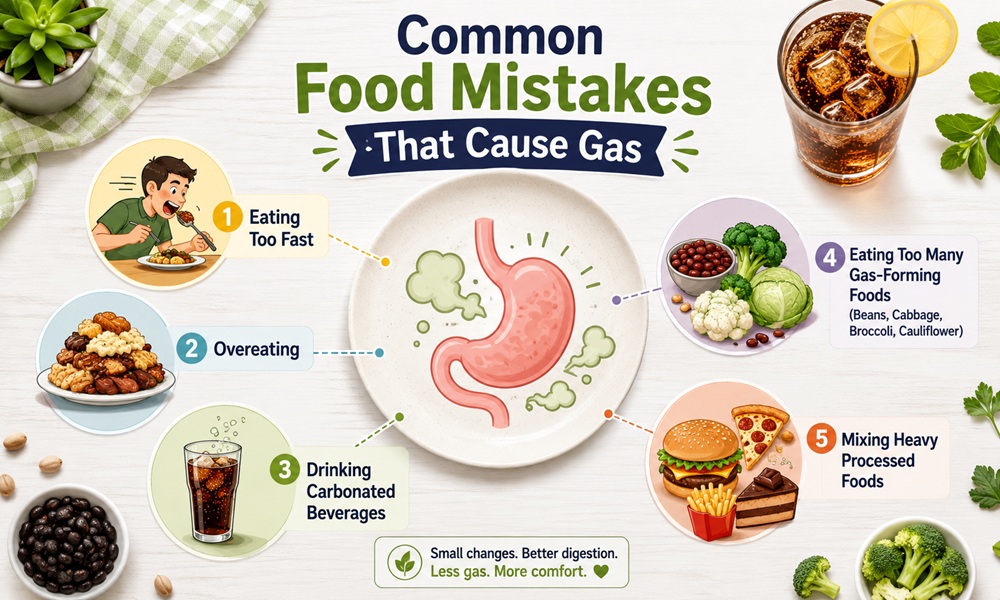
Some gas is completely normal; it’s a byproduct of healthy digestion. But certain foods and eating habits produce far more than necessary. The usual cause is fermentable carbohydrates (FODMAPs) reaching the colon, where gut bacteria break them down and release gas. Here are the common food mistakes that leave you bloated and gassy.
The food groups most likely to cause gas
| Category | Examples | Why it causes gas |
| Legumes | Beans, lentils, chickpeas | Rich in raffinose and FODMAPs that ferment in the colon |
| Cruciferous veg | Broccoli, cauliflower, cabbage, sprouts | Raffinose plus sulphur compounds (smellier gas) |
| Carbonated drinks | Soda, sparkling water, beer | Add carbon dioxide gas directly to the gut |
| Dairy | Milk, ice cream, soft cheese | Lactose, which many adults can’t fully digest |
| Sugar alcohols | Sugar-free gum, mints, diet sodas | Sorbitol, xylitol and erythritol are poorly absorbed |
| Sulphur-rich foods | Eggs, garlic, onions, dried fruit | Produce hydrogen sulphide, the strong-smelling gas |
| High-fructose foods | Apples, pears, honey, juice | Excess fructose ferments when not fully absorbed |
Note that many of these are genuinely healthy. The goal isn’t to cut them out, but to eat them in amounts your gut tolerates.
The eating habits that quietly add air
It isn’t only what you eat. How you eat pushes extra air into your gut:
- Eating too fast: rushing means swallowing more air and chewing less, so food is harder to break down.
- Drinking through straws and chewing gum: both funnel air straight into your stomach.
- Ramping up fibre too quickly: a sudden jump in beans, bran or vegetables overwhelms your gut bacteria. Increase fibre by just 2-3 grams a day so your system adapts.
- Big, heavy meals: large portions sit and ferment longer, producing more gas.
Easy lower-gas swaps
| Instead of… | Try… |
| Large bowl of beans | Smaller portion, soaked and well-cooked |
| Broccoli and cauliflower | Spinach, lettuce, cucumber, carrots |
| Regular milk | Lactose-free milk or a tolerated plant milk |
| Sugar-free gum and mints | Plain water or fresh herbs to freshen breath |
| Apple or pear | Banana, blueberries, orange or strawberries |
| Soda or sparkling water | Still water with lemon or mint |
Smart tricks that reduce gas
- Soak dried beans and lentils before cooking, and cook them thoroughly.
- Add ginger or fennel, which help move food through the gut.
- Take a gentle 10-15 minute walk after meals to ease bloating.
- Slow down: chew well and put the fork down between bites.
Why some people are gassier than others
Two people can eat the same beans and react completely differently. A few things explain the gap. Your gut microbiome is unique, so the mix of bacteria fermenting your food varies; some strains simply produce more gas. Lactose tolerance differs too, as many adults make less of the enzyme that digests milk sugar. And habits like eating fast or chewing gum add swallowed air on top of the gas made in the colon.
Passing gas up to about 20 times a day is normal. It’s the smell, discomfort or bloating that usually pushes people to make changes, not the volume itself. The strong odour comes mainly from sulphur-containing foods like eggs, garlic, onions and red meat.
How to find your personal triggers
Rather than cutting many foods at once, keep a short food and symptom diary for two weeks. Note what you ate and how gassy or bloated you felt a few hours later. Patterns usually appear fast, and you can then reduce just the culprits instead of stripping nutritious foods from your diet.
Frequently asked questions
Are beans really worth eating if they cause gas?
Yes. Beans are rich in fibre, protein and nutrients, and most people adapt over a few weeks of regular, moderate servings. Soaking and thorough cooking reduce the gas-causing sugars, and a smaller portion is gentler while your gut adjusts.
Do digestive enzyme products help?
They can. Lactase drops or tablets help with dairy, and products containing the enzyme alpha-galactosidase break down the sugars in beans and cruciferous vegetables before they reach the colon. They work best taken with the first bite.
Does drinking water help reduce gas?
Indirectly, yes. Staying hydrated keeps things moving through the gut, which prevents the slow fermentation and constipation that worsen bloating and gas. Sipping water with meals is fine; it’s gulping large amounts or drinking lots of fizzy water that adds air.
Why am I suddenly gassier than before?
Common reasons include a new high-fibre diet, more sugar-free products, increased stress, or a recent course of antibiotics altering your gut bacteria. If it persists alongside other symptoms, it’s worth checking with a doctor.
If gas is severe, persistent, or comes with pain, weight loss or changes in bowel habits, see a doctor; it can occasionally point to lactose intolerance, coeliac disease or IBS rather than diet alone.