
Why Travel Wrecks Your Gut
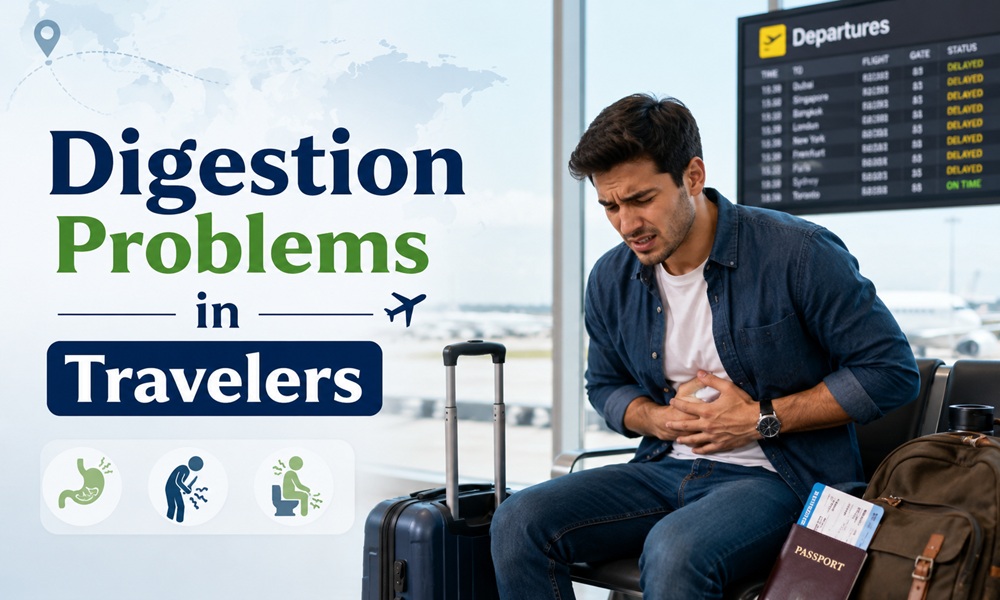
Your gut microbiome — trillions of bacteria — adapted to your home food, water, and routine. Travel changes everything at once: new bacteria in water and food, new food types your gut doesn’t have enzymes for, different time zones, stress, dehydration from flying, and often constipation from holding the urge in transit. Up to 70% of travelers to certain regions develop digestive issues within two weeks of arrival.
PHASE 1: Pre-Travel Checklist (1 Week Before)
✅ 7 Days Before
- Start a daily probiotic — Lactobacillus and Saccharomyces boulardii strains have the best research
- Increase fibre intake — strengthens gut barrier
- Reduce processed food — boosts microbiome diversity
- Check vaccinations needed for the destination
- Get a doctor’s letter if you carry prescription stomach medication
✅ 3 Days Before
- Pack medications: ORS sachets, loperamide, antacids, paracetamol
- Pack probiotic for the trip
- Pack zinc tablets — shorten diarrhea duration
- Refresh your prescriptions if traveling more than 14 days
- Print insurance info; save emergency numbers in phone
✅ Day Before
- Light, familiar dinner — don’t stress the gut just before travel
- Avoid alcohol
- Hydrate aggressively
- Pack 2 reusable water bottles
- Sleep 8 hours — fatigue weakens gut immunity
PHASE 2: In-Transit (Day of Travel)
✅ Before Boarding
- Light breakfast — don’t board on empty stomach or heavy meal
- Empty the bowels if possible — flights worsen constipation
- Carry: own snacks (nuts, dried fruit, granola), refillable water bottle
- Avoid airport food courts if possible — high contamination risk on busy days
✅ During the Flight
- Drink water every hour — cabin air dehydrates rapidly
- Skip alcohol entirely on flights — doubles dehydration
- Skip coffee after 2 PM local time
- Walk the aisle every 90 minutes — moves the gut
- If served meals, pick vegetarian (lower contamination risk)
- Avoid gas-producing foods (carbonated drinks, beans) — pressure causes bloating
- Probiotic with your in-flight meal
✅ On Arrival
- Buy bottled water from a reliable shop
- Eat your first meal at a busy, popular restaurant (high turnover = fresh food)
- Don’t gorge on local food on day 1 — let your gut adjust
- Wash hands before every meal — top transmission route for travel illness
- Sleep early to reset circadian rhythm
PHASE 3: On the Trip — Daily Rules
The WHO 4-Word Mantra
| “Boil it, peel it, cook it, or forget it.”
— World Health Organization |
Every food choice in a new place runs through this filter. Bottled or boiled water? Peeled fruit you peeled yourself? Hot cooked food? Yes. Salad washed in tap water, pre-cut fruit, ice cubes, raw seafood? No.
Daily Food Rules
- Drink only bottled or boiled water — check the bottle seal is intact
- Eat hot, well-cooked food — pathogens die above 70°C
- Peel all fruit yourself, with clean hands
- Avoid salads, raw vegetables, pre-cut fruit
- No ice cubes — including in juice, alcohol, water
- Avoid fresh fruit juice from street vendors
- Be wary of dairy in regions with poor refrigeration
- Eat at busy local restaurants — high turnover means fresh
- Carry hand sanitizer; use before every meal
Daily Habits
- 3 litres of water minimum daily
- Take probiotic at the same time daily
- Don’t skip meals — hunger then overeating shocks digestion
- Walk after each meal — helps adaptation
- Limit alcohol — kills good gut bacteria you need
- Sleep 7+ hours — recovery happens at night
Risk Levels by Food/Drink Choice
| Item | Risk Level |
| Bottled water (sealed) | 🟢 Safe |
| Hot tea/coffee | 🟢 Safe |
| Well-cooked food, served hot | 🟢 Safe |
| Peeled fruit (peeled by you) | 🟢 Safe |
| Salads in good restaurants | 🟡 Moderate |
| Pre-cut fruit from buffet | 🟡 Moderate |
| Tap water in cleaner regions | 🟡 Moderate |
| Street food (busy stall) | 🟡 Moderate |
| Salads/raw vegetables in rural area | 🔴 High Risk |
| Ice cubes anywhere uncertain | 🔴 High Risk |
| Raw seafood / undercooked meat | 🔴 High Risk |
| Fresh juice from street vendor | 🔴 High Risk |
| Tap water (anywhere uncertain) | 🔴 High Risk |
PHASE 4: If Illness Strikes
✅ Mild Diarrhea (1–3 loose stools/day, no fever)
- Hydrate — ORS every 2 hours
- BRAT diet: bananas, rice, applesauce, toast
- Take probiotic
- Avoid dairy, fried food, alcohol, caffeine
- Rest — don’t push through sightseeing
✅ Moderate Diarrhea (4–6 loose stools/day or mild fever)
- Aggressive ORS — 1 sachet every 4 hours
- Loperamide for symptomatic relief (NOT if bloody stools)
- Zinc tablets shorten duration
- Visit a local clinic
- Reach out to travel insurance helpline
⚠️ Severe — See a Doctor Immediately
- Blood or pus in stool
- High fever (above 39°C / 102°F)
- Inability to keep fluids down for 12+ hours
- Signs of severe dehydration (no urine, sunken eyes, confusion)
- Severe abdominal pain
PHASE 5: Post-Trip Recovery (First 48 Hours Home)
✅ Day 1 Home
- Light familiar food — khichdi, dal-rice, curd
- Continue probiotic for 1 week
- Aggressive rehydration
- Sleep 8+ hours in your own bed
✅ Day 2 Home
- Resume normal diet gradually
- Add fermented foods (yogurt, kefir, kanji) to rebuild microbiome
- Light walk to wake up the gut
- Skip alcohol and heavy meals for 48 hours
⚠️ Watch for Delayed Symptoms
Some travel infections show symptoms after you return home:
- Persistent diarrhea beyond 3 days post-trip
- Fever 1–2 weeks after return — could be malaria, typhoid
- Jaundice or yellowing skin — possible hepatitis
- Unusual fatigue or weight loss
See a doctor and mention your travel history — diagnosis depends on it.
The Hajj Pilgrim’s Date + Curd Trick
A traditional remedy used by Saudi pilgrims for centuries: 5 dates eaten with a small bowl of curd, twice daily. Provides probiotics, natural electrolytes from dates, and gentle calories. Used as preventive nutrition during weeks of travel and stress.
| Always Carry — Traveler’s Gut Kit
ORS sachets (4–6), loperamide tablets, zinc tablets, paracetamol, probiotic capsules, antacid tablets, hand sanitizer, water purification tablets, and a doctor’s letter for any prescription. Fits in one small pouch. Has saved countless trips. |
Common Questions
Q: Should I take antibiotics ‘just in case’ before traveling?
A: No. Routine prophylactic antibiotics are not recommended — they disrupt your microbiome (worsening risk) and contribute to antibiotic resistance. Take only if a doctor specifically prescribes them for a high-risk situation.
Q: Are probiotics actually proven to help travelers?
A: Yes, modest but real evidence. Specific strains like Saccharomyces boulardii and Lactobacillus rhamnosus GG have studies showing 30–50% reduction in traveler’s diarrhea. Start 7 days before travel and continue throughout.
Q: How long does the gut take to recover after a trip with stomach upset?
A: Mild upset: 3–5 days. Moderate: 1–2 weeks. Severe with antibiotics: 4–6 weeks to rebuild the microbiome. Probiotics and fermented foods speed it up.