

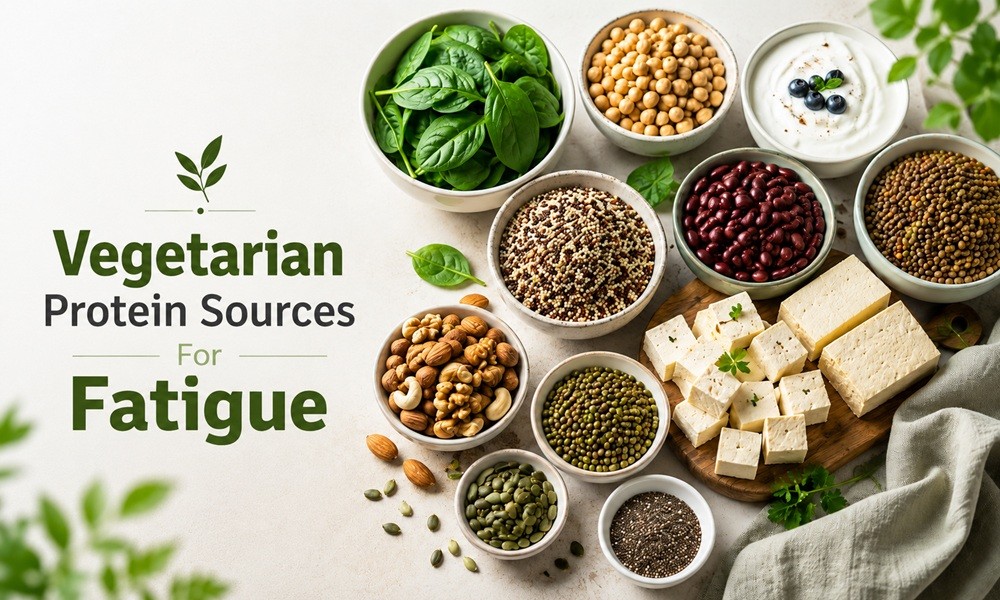
What This Article Covers That Others Don’t
Most articles just list protein foods. This guide goes deeper. You will learn the exact protein-per-meal target that prevents the 3 PM energy crash, why B12 and iron deficiency are often the real culprits behind fatigue (not just low protein), and the food-pairing trick that doubles iron absorption from plant foods. We also include a meal-timing chart most blogs miss.
Why Low Protein Causes Fatigue
Protein does more than build muscle. It stabilises blood sugar, helps make red blood cells, and supports neurotransmitters that keep you alert. When intake drops, energy drops too.
If you feel weak, get hungry soon after meals, or struggle to focus, low protein could be the reason. Vegetarians often miss the mark because plant foods are lower in protein per serving than meat. The fix is variety, not stress.
Quick Signs You May Need More Protein
- Constant tiredness even after sleep
- Cravings every 2 hours
- Slow recovery after workouts
- Brittle hair and nails
- Frequent mood swings
How Much Protein Do You Need Daily?
The general rule is 0.8 to 1 gram of protein per kilogram of body weight. Active people, older adults, and pregnant women need more.
Aim for 15 to 25 grams of protein at each meal plus a 6-10 gram snack. Spreading protein across the day keeps energy stable.
| Person Type | Daily Protein Need |
| Sedentary adult (60 kg) | 48 g |
| Active adult (60 kg) | 72-90 g |
| Older adult (70+) | 70-84 g |
| Pregnant woman | 71+ g |
| Athlete | 90-120 g |
12 Best Vegetarian Protein Sources for Energy
1. Lentils (Dal)
Lentils are a powerhouse. One cooked cup gives roughly 18 grams of protein plus iron, folate, and fibre. Iron prevents the most common cause of fatigue in vegetarians – anaemia.
Best way to eat: Pair with rice or roti to form a complete protein.
2. Chickpeas (Chana)
One cup of chickpeas packs about 15 grams of protein and a steady release of carbs that keeps blood sugar stable.
Easy idea: Add roasted chana to salads or eat boiled chana as a snack.
3. Paneer
A 100 g serving of paneer delivers around 18 grams of protein and calcium. It is filling and easy to add to most Indian meals.
Pro tip: Choose low-fat paneer if you watch calories.
4. Greek Yogurt
Greek yogurt offers 15-20 grams of protein per cup, plus probiotics for gut health. A healthy gut supports better energy.
5. Tofu
Tofu is a complete plant protein. One cup gives 20 grams of protein along with iron and calcium.
6. Tempeh
Fermented soy, tempeh provides 31 grams of protein per cup and probiotics. It is one of the highest-protein vegetarian foods.
7. Edamame
A cup of edamame has about 17 grams of protein. It is also rich in folate and vitamin K.
8. Eggs (Lacto-Ovo Vegetarian)
One large egg has 6 grams of high-quality protein and B12 – a vitamin most plant foods lack. B12 deficiency is a top cause of fatigue.
9. Quinoa
Quinoa is a complete protein grain with 8 grams per cooked cup. Use it instead of rice for a protein boost.
10. Almonds, Peanuts, Cashews
A 30 g handful gives 6-7 grams of protein plus magnesium, which supports energy production at the cellular level.
11. Pumpkin Seeds
Two tablespoons offer 5 grams of protein, iron, and zinc. Great for an afternoon snack.
12. Milk and Cheese
A glass of milk has 8 grams of protein. Cheese can add 5-7 grams per slice.
Plant Protein Sources at a Glance
| Food | Serving Size | Protein (g) | Best Meal |
| Lentils | 1 cup cooked | 18 | Lunch |
| Chickpeas | 1 cup | 15 | Lunch/snack |
| Paneer | 100 g | 18 | Lunch/dinner |
| Greek yogurt | 1 cup | 17 | Breakfast |
| Tofu | 1 cup | 20 | Dinner |
| Tempeh | 1 cup | 31 | Dinner |
| Edamame | 1 cup | 17 | Snack |
| Eggs | 1 large | 6 | Breakfast |
| Quinoa | 1 cup cooked | 8 | Lunch |
| Almonds | 30 g | 6 | Snack |
| Pumpkin seeds | 2 tbsp | 5 | Snack |
| Milk | 1 glass | 8 | Anytime |
The Iron-Vitamin C Pairing Trick
Plant iron (non-heme) is harder to absorb than animal iron. Pair iron-rich foods with vitamin C to triple absorption.
Examples:
- Lentil dal with a squeeze of lemon
- Spinach salad with bell peppers
- Chickpea curry with tomato
This single trick fixes the most overlooked cause of vegetarian fatigue.
Sample High-Protein Vegetarian Day (80+ g)
- Breakfast: Two eggs, one glass milk, two slices toast = 22 g
- Snack: Greek yogurt with almonds = 15 g
- Lunch: Dal, rice, paneer sabzi = 28 g
- Snack: Boiled chana with lemon = 10 g
- Dinner: Tofu stir-fry with quinoa = 25 g
Total: 100 g of protein
Common Mistakes That Keep You Tired
- Eating only carbs at breakfast – toast and tea leaves you hungry by 11 AM.
- Skipping snacks – protein gaps cause energy dips.
- Relying only on dal – variety beats repetition.
- Ignoring B12 – add fortified foods or a supplement.
- Too much processed protein – fake meats can spike bloating.
When to See a Doctor
If you feel tired despite eating enough protein, get tested for:
- Iron deficiency (ferritin level)
- Vitamin B12
- Vitamin D
- Thyroid function
These four panels solve most cases of unexplained fatigue.
Frequently Asked Questions
Can a vegetarian diet provide enough protein for athletes?
Yes. With smart planning around tofu, tempeh, lentils, and dairy, athletes can easily hit 100 g+ per day.
Which vegetarian food has the most protein?
Tempeh tops the list with 31 g per cup, followed by tofu and lentils.
Is whey protein vegetarian?
Yes. Whey comes from milk and is suitable for lacto-vegetarians.
Why am I still tired after eating protein?
Check for iron, B12, or thyroid issues. Protein alone is not the only fuel.
How do I get enough protein without meat or eggs?
Combine lentils with rice, add tofu and tempeh, and snack on nuts and Greek yogurt.