
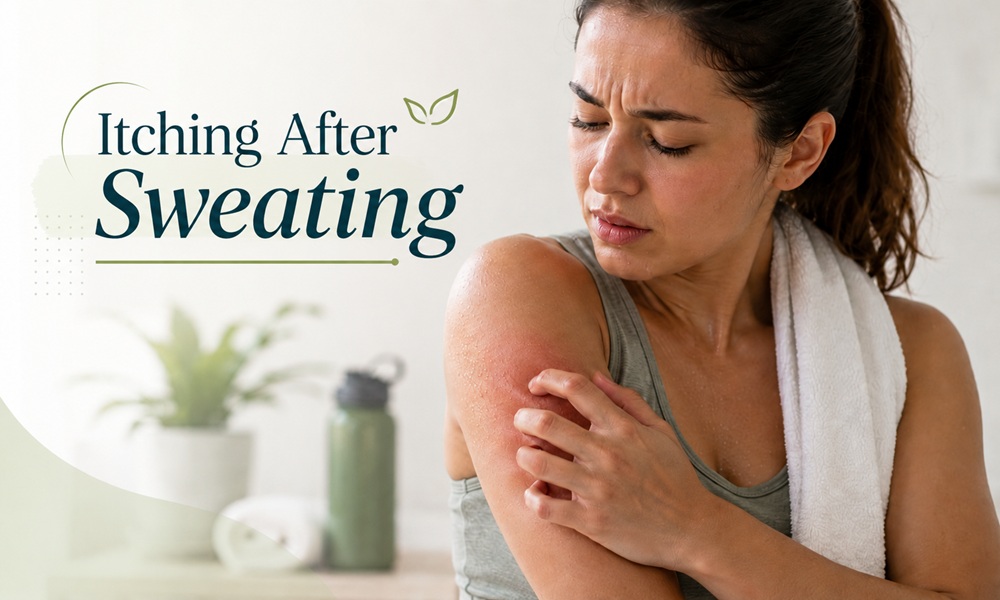
You go for a walk, hit the gym, or simply step into a hot kitchen — and suddenly tiny bumps appear on your chest, arms, or back, accompanied by an intense itching or prickling sensation. Welcome to one of the most common but most misunderstood skin reactions: itching after sweating.
In most cases, it is a condition called cholinergic urticaria, also known as “heat bumps” or sweat-induced hives.
What Is Cholinergic Urticaria?
Cholinergic urticaria is a type of inducible hives triggered by a rise in body temperature — specifically, by sweating. It produces small, itchy, pinpoint bumps (1–4 mm) often surrounded by red flares. It typically lasts 15 minutes to an hour after sweating stops.
It is most common in people aged 15–35 and affects men slightly more than women.
Why Does Sweating Make You Itch?
Three main theories explain this:
- Histamine release: Heat triggers mast cells in your skin to release histamine — the same chemical responsible for allergies.
- Sweat allergy: Your immune system may react to a specific protein in your sweat (MGL-1304).
- Nervous system overactivity: The cholinergic nerves that control sweating release acetylcholine, which can over-activate mast cells in some people.
Common Triggers
- Exercise (especially cardio)
- Hot weather and humid days
- Hot showers or baths
- Saunas and steam rooms
- Spicy food
- Emotional stress and anxiety
- Heavy clothing
- Sudden temperature change
Symptoms
- Small, itchy, raised bumps (1–4 mm)
- Red flares or patches around the bumps
- Prickling, tingling, or burning sensation
- Itching that can be intense
- Bumps typically appear on the trunk, arms, neck (less on hands and face)
- Symptoms usually resolve within 30–60 minutes after cooling down
In rare cases, severe reactions can cause wheezing, headache, low blood pressure, or anaphylaxis — this is a medical emergency.
Cholinergic Urticaria vs. Other Sweat-Related Skin Problems
| Condition | Trigger | Key Sign |
| Cholinergic urticaria | Sweating, heat | Tiny itchy bumps |
| Heat rash (prickly heat) | Blocked sweat ducts | Tiny red bumps in clusters |
| Solar urticaria | Sun exposure | Hives only on sun-exposed skin |
| Eczema (heat-triggered) | Sweat + irritants | Patchy dry, scaly skin |
| Exercise-induced anaphylaxis | Intense exercise | Severe whole-body reaction |
How to Get Quick Relief
In the Moment
- Stop the activity that caused sweating.
- Move to a cool, air-conditioned area.
- Splash cool (not ice cold) water on the affected area.
- Apply a wet cool compress for 5–10 minutes.
- Change out of sweaty clothes immediately.
- Use calamine lotion or aloe vera gel.
- Take an antihistamine (cetirizine or loratadine) if it persists.
Long-Term Management & Treatment
Lifestyle Changes
- Wear loose, breathable cotton clothing.
- Shower with lukewarm water, not hot.
- Stay hydrated.
- Avoid spicy food if it triggers you.
- Exercise in cooler hours (early morning, late evening).
- Manage stress with breathing, yoga, or meditation.
Medical Treatments
- Antihistamines: Daily cetirizine or fexofenadine.
- Topical creams: Doctor-prescribed corticosteroid creams for severe flare-ups.
- Omalizumab: An anti-IgE injection used for resistant cases.
- Anticholinergics: In some cases, doctors may prescribe these.
Hardening Therapy
Gradual, controlled heat exposure — slowly building heat and sweat tolerance — can reduce reactions over time. Best done under dermatology guidance.
Home Remedies That Help
- Aloe vera gel — soothes inflamed skin.
- Cool oatmeal bath — calms itching.
- Coconut oil — moisturizes and soothes.
- Cold compress — fastest physical relief.
- Avoid scratching — it worsens the rash and risks infection.
Foods That Can Worsen It
- Spicy food
- Hot beverages (coffee, hot soup)
- Alcohol (especially red wine)
- Some people: shellfish, eggs, dairy (if also allergic)
When to See a Dermatologist
Get medical help if your hives last longer than 1 hour after cooling down, you have wheezing or trouble breathing, you feel faint or dizzy, your face or throat swells, antihistamines do not work, or symptoms interfere with daily life. Also see a doctor if you have other allergies, asthma, or eczema — these conditions often overlap.
How Long Does It Last?
Each flare-up usually lasts 15–60 minutes. The overall condition often goes away on its own within a few years for most people, especially as they age into their 30s and 40s. Some have it lifelong but milder.
FAQs
Is itching after sweating dangerous?
Usually no — it is annoying but harmless. Rarely, it can be a sign of more severe allergic reaction.
Can I still exercise if I have cholinergic urticaria?
Yes. Many people manage it well with antihistamines, cool environments, and lighter exercise sessions.
Will it ever go away?
In most cases, yes — usually within 5–10 years of onset.
Is itching after sweating contagious?
No. It is an immune system response, not an infection.
Does drinking more water help?
Indirectly yes. Good hydration helps your body regulate temperature better.